



Home › magazine › european reports › 2013

More training focus in Italy
24th of June 2013Anna Garbagna analyses the results of a recent survey into the Italian distribution sector.
The proportion of companies with a turnover of under one million euros is 50.7 per cent compared with 53.9 per cent in 2010, while 11.8 per cent have turnover between one and 1.5 million euros, 16.7 per cent between 1.5 and 2.5 million and 20.8 per cent have over 2.5 million euros. This emerged from a survey carried out by AfidampCOM whose aim was to analyse the Italian market for the distribution of machines, products and equipment for professional cleaning.
The scenario that arises from the survey highlights the presence of a large number of small companies, mainly family run, alongside a few large groups which determine the market trend. This characteristic is also supported by the average size of the workforce: the average number of
employees is between five and 10, rising to more than 20 for large companies.
The research carried out last year highlights that sales mostly take place in the provinces and regions near the headquarters of the company. This concentration of sales is confirmed in terms of the number of customers as well as in terms of the type of products being sold.
It appears there is not typically any one type of product which determines the sales total - it is generally made up from the sale of various goods. Furthermore, it emerges that most companies are family run (63 per cent). Pre- and after-sales services and maintenance are the most important services being offered and they represent the pride and joy of Italian distribution.
Particular attention must be paid to the rental market which is becoming more and more significant: in fact 41 per cent of companies being interviewed replied that rental makes up 15 per cent of total sales. This is an indicator of a turning point in history and of a preference towards a convenient practice for the client who can obtain the best possible service for the required length of time without the obligation to purchase.
As far as the reference markets are concerned, the figures from the previous year are confirmed, ie, the main clients are cleaning companies and industries in general. The share of HoReCa has increased by about seven percentage points, and among the sale channels, the traditional sales network is the most used despite the fact that more and more companies are using the internet (24 per cent).
Last but not least, particular attention is being paid to training, especially technical and commercial. Comparing the number of collaborators with the nature of courses that took place, it emerged that companies with more than 10 employees organise courses in both areas, while companies with fewer than 10 employees focus on technical/operative courses. This is a sign that both refresher and basic training must be more and more the foundation for this work.
Healthy growth continues in Russia
24th of June 2013Russian reporter Oleg Popov from Cristanval cleaning company reviews latest sector statistics.
In 2009, the Russian cleaning market reached one billion dollars in volume. Based on figures from marketing research done by the DISCOVER Research Group, between 2010 and 2012, that volume practically doubled.
Growth in the market is due to increased demand for cleaning services in adjacent areas, as well as an increase in demand for different types of chemical cleaning. An important component is the growth in the number of serviceable properties due to an increase in retail space.
Today in Russia there are over 1,000 cleaning companies. In Moscow and St Petersburg alone, there are roughly 350 firms, 10 of the largest are actively expanding regionally. According to analysts there are five major players in the cleaning market. In terms of value, 25 per cent of the market is held by those companies.
The top five Russian cleaning companies are listed as: Facilicom Group (brand Chistyi Svet), Ronova Group,Cristanval Cleaning, OMS Cleaning and CleanStar Group.
The market itself can be divided into four main sectors according to the type of space serviced: office, retail, service and industrial. One of the most promising and growing sectors is industrial cleaning. In recent years retail cleaning as a sector has significantly increased and has reached roughly 30 per cent of the overall volume of the market. The majority of clients are owners of office, retail and industrial real estate.
The percentage of income among cleaning companies from services provided to these clients is 60 per cent, while the percentage of overall demand for professional cleaning services nears 80 per cent.
2012 was marked by several important events which will impact the market in coming years. First, bidding ended for services during the Sochi 2014 Olympic Games. Secondly, bidding was held for cleaning and waste removal services for the 146 Moscow Metropolitan stations. We will discuss these events in more detail in the next edition of ECJ.
During the last year, the need for the creation of a regulatory framework has increased, while personnel issues have worsened. In the cleaning market the tendency remains towards the technological improvement of services and the introduction of a wider spectrum of more specialised work. For larger cleaning companies, an interesting prospect remains the development of related sectors: building engineering, maintenance, landscaping, and provision of temporary staff.
Between 2013 and 2015 stable, significant growth in the market can be expected, as much as 30-40 per cent a year. At the same time cleaning has the potential to break through into new sectors such as city utilities systems and medical institutions.
Occupational hazards in Germany
24th of June 2013ECJ’s correspondent in Germany Thomas Schulte-Marxloh reports on occupational health statistics.

In 2009 occupational disability caused an estimated loss of 1.3 million man-years which means a gross loss of 75 billion euros, taking into account that all employees create value with their work.
Good news first: occupational safety is increasing in Germany. The numbers of fatal and non-fatal occupational accidents (in 1993: 1,867; in 2009: 622) and commuting accidents have been going down over the years. However after a continuous decrease in recent years, the number of occupational diseases is climbing again.
Conditions in the contract cleaning business can be tough and dangerous. Cleaners must operate in difficult working conditions: they have to carry heavy equipment and work with vibrating cleaning machines; they work in areas contaminated with oil, filth, grease, etc; they suffer from glaring or dim light, loud noise, low or high temperatures, draughts, a moist or wet environment; they have to deal with hazardous or microbiologically contaminated materials, vapour, gases or fumes. Workers in the contract cleaning industry are mainly affected by falling accidents and skin irritations but they also suffer from painful backs or necks very often.
Apart from physical stress, the accelerated, global world means psychological stress too. Workers have to deal with strict operational rules, monotonous work, increasing job requirements, time pressure, multi-tasking demands and interruptions in the work flow. They are asked to do work they are not qualified for, confronted with new duties, asked to try new procedures, always working at the limit and aware that minor mistakes may mean severe losses.
According to research by the Federal Institute for Occupational Safety and Health (BAuA) a ‘good job’ includes the following: a guaranteed salary and a secure workplace as well as pleasing work; executives should have respectful manners and provide for health protection of their employees by adequately designed workplaces; workmates should support each other. Work should have a ‘meaning’, something to be proud of and not boring.
But there is a difference between a varied job and permanent changes that can have a rather stressful effect on both executives and employees. They are challenged by new process technologies, new computer software, new machinery or equipment, new or significantly changed products, materials or services, restructuring measures, job releases, more freelancers, part-timers and trainees, new managers or executives. Also a gap between agreed and actual work time is stressful for the worker.
The BAuA recently published the ‘Stressreport Deutschland 2012’ which points at a correlation between technical and organisational changes, higher job requirements and an increase in stress. The report also refers to studies which prove that actually no one can ‘get used’ to but rather accumulates stress.
In the end, stress can be the trigger for accidents or wrong decisions affecting business, human resources, health, family and social life. Luckily, the BAuA research also advises how to reduce stress: by good organisation, consistency and - actually – friendliness.
High level discussions
21st of June 2013A board member of the Polish Cleaning Industry Chamber (PIGC) has been appointed to take part in a high level advisory group to the European Commission’s work. Correspondent for ECJ Marek Kowalski reports.
Due to the involvement of the board of Polish Cleaning Industry Chamber (PIGC), supported by the leaders of the Polish Confederation of Private Employers Lewiatan, Krzysztof Pozna?ski – a board member of PIGC - was appointed to take part in a high level advisory group to the European Commission’s work.
The initiative is the result of the Commission’s activities aimed at improving the European production and services competitiveness in relation to the USA and Asia. In order to improve employees’ working conditions, specially in the production sector, the Commission is going to work on a report whose goal is to define the obstacles slowing the development of business
services in Europe.
The study is going to include recommendations on how to lift the barriers and improve the conditions for the development of services recognising that the key factor in boosting production is creating well-functioning, effective services commonly referred to as outsourcing. According to the definition specified by the Commission, the services include the traditionally labelled facility management services such as cleaning, catering, security, technical and advisory services, designing or business process outsourcing.
The Polish representative in this group of experts on services from the EU is the only Eastern Europe representative, except for a Romanian member, being one of two cleaning industry voices. We hope that due to our representative’s work in the advisory group our problems can be properly articulated - the necessity of enhancing employment flexibility, the restrictions of the public tender legislation, the constantly changing laws on hiring the handicapped, free flow of services within the EU and many other challenges the cleaning industry is struggling with. He will also suggest options which are the best solutions from our industry’s point of view.
For the last five years Krzysztof Pozna?ski has been the board president of ISS Facility Services and vice-president of the Polish Cleaning Industry Chamber. He graduated from Warsaw University’s Faculty of Management and received the MBA diploma from the University of Illinois.
In his career he has focused on catering, cinema, security and facility management services. During the 22 years of his career he has worked with such companies as PepsiCo, Multikino, G4S and Cushman & Wakefield.
Quality marks and codes in the Netherlands
21st of June 2013ECJ’s correspondent in the Netherlands Nico Lemmens takes a look at the plethora of quality marks and responsible conduct codes flooding the Dutch cleaning market.
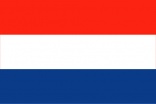
The Dutch facility services sector is flooded with quality marks and codes of responsible conduct. The Code of Responsible Market Conduct in the Dutch cleaning industry has been made part of the recent so-called Social Agreement between the Dutch trades unions and the umbrella employers’ associations. The code is considered to serve as an example for tendering in general. The sectors of catering, security and temping are considering the introduction of similar codes of conduct.
The Dutch association for cleaning intermediaries is developing a certificate, mainly consisting of elements of responsible market conduct. The largest association of purchasers NEVI (more than 6,000 members) has developed its own code of conduct for its members. It contains ‘best practices’ for ethical purchasing dilemmas. Cornerstones are respectability, open competition, professionalism, objectivity and sustainability.
The largest association for facility management FMN and the Dutch Green Building Council have developed a code of conduct for ‘sustainable end users’, trying to encourage sustainable behaviour.
Back to the cleaning sector. There the Dutch association of cleaning companies OSB introduced a quality mark. All of its members were to obtain the mark not later than January 1 2013. When it became clear that many of them were not going to meet that deadline, a transitional arrangement was made: not later than May 1 2013 member companies were to have made a definitive commitment to obtain the quality mark. The outcome is that no less than 150 member companies have not made that commitment.
In OSB’s board meeting at the end of May they were due to be suspended from membership and nominated for expulsion during the December general meeting of OSB members. Beforehand the expectation was that 75 member companies were going to be expelled. With these 150 expulsions the association’s market share will decrease from 80 to 60 per cent.
The reverse side of the coin is that 179 cleaning companies have shown their interest in becoming an OSB member. Chairman Hans Simons expects his organisation’s market share to recover to 70 or 75 per cent by the end of 2014. His association is willing to pay the price of this loss of market share and will stay focused on quality instead of quantity.
Economic crisis stifles cleaning sector in Spain
17th of May 2013Juan Díez de los Ríos, president of the Professional Association of Cleaning Companies (ASPEL), writes exclusively for ECJ about the professional cleaning sector in Spain as part of our series focusing on the major countries of Europe.
The economic crisis which is still gripping Spain, together with the complex Spanish employment framework, are significantly compromising the viability of many of the country’s cleaning companies.
At the start of the recession in 2008 there were 18,279 cleaning companies in Spain, with a total turnover of 8,300 million euros. Just two years later more than 56,000 employees had been forced to leave the sector, 2,169 companies had closed down and turnover had fallen by
14 per cent.
High outsourcing rate
The country has one of the highest percentages of cleaning services outsourcing in the EU, approximately 80 per cent, although it is highly fragmented. In 2010, 75 per cent of the 16,110 companies had less than 50 workers and only 0.45 per cent employed more than 500 people. It is this latter group which ASPEL represents.
ASPEL is the employers’ organisation in the buildings and premises cleaning sector. It represents 17 company groups, comprising 51 per cent of the sector’s turnover and 37 per cent of its workers (over 134,000), and it has a presence throughout the country. Its member companies’ business is concentrated in the cleaning of buildings - particularly offices (45 per cent), education (14 per cent), health (12 per cent) and transport (nine per cent).
The companies dominating the Spanish market are ISS, Clece, Eulen, Eurolimp, FCC, Pilsa, Acciona, Valoriza Limpisa and Samsic. They account for around 40 per cent of market turnover. Seventy-nine per cent of cleaning workers are female, 55 per cent are part-time and foreign employees account for 20 per cent of the workforce.
As is happening in other EU countries which have entered recession due to the economic and financial crisis, the Spanish cleaning sector is being very badly affected by budgetary adjustments in public and private tendering procedures. Another damaging factor is non-compliance with the law on late payment by public authorities, and the lack of liquidity to make salary and social security payments.
ASPEL has gathered data related to overdue payments by public administrations as a group to its member companies. In 2010 the total outstanding debt was 552 million euros, with late payment standing at 78 days for central government, 245 days late for local communities and 300 days late for city councils.
In March 2010 the serious problem of payment to suppliers to the public sector actually led to the Spanish government creating a special supplier payment-financing fund, providing liquidity for local and regional administrations. This had a briefly positive effect by virtue of the fact that the total debt to ASPEL companies fell by 69 per cent.
Despite this however, the arrears have not disappeared, given the fact that as of today overdue debt has grown to 378 million euros, with late payment ranging from 92 to 139 days. So ASPEL has publicly requested the reissue of the plan to strengthen assistance from the government in respect of payment to suppliers of services by the public authorities.
This situation is exacerbated by the fact competition in the cleaning sector is based solely on price. In some cases electronic auctions are now being employed, a controversial method among cleaning companies. From ASPEL’s point of view the processes of electronic auctions completely disregard the sustainability of employment, the quality of the service which will be provided, or respect for environmental and social responsibility - among other aspects. This puts pressure on price reform and the elimination of disproportionate tenders in public contracting.
Until very recently the decentralised structure of the Spanish State meant that a company wishing to work throughout the country had to adapt its personnel policy to the directives of 61 collective agreements in different spheres (provincial, autonomous community, sectoral, and even by type of work). In December 2012, however, a national collective agreement was signed for the first time - a real milestone for the market.
Major employment reform
Cleaning companies have also been greatly affected by the four major employment reforms which have been imposed during the last six years. This has constantly altered the economic picture for companies in sectors such as ours, which employ such large numbers of people.
As far as the future is concerned for the companies represented by ASPEL, the emphasis will be on improving their company strategies, diversification, growing in size and adapting as best as possible to the legal framework and the budgetary limitations of their clients. Progress very much depends on Spain’s economic situation but there is undoubtedly still potential for growth in the market. Not only that - new international markets are also opening up and bring additional opportunities.