


Home › magazine › june july 2026 › latest news › Washroom excellence good for business

Washroom excellence - good for business
21st of July 2026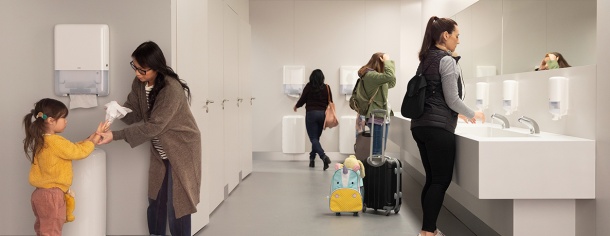
Public washrooms are no longer a ‘back of house’ afterthought. They are a reputational touchpoint, an incentive for customers to return to a building, and a wellbeing issue. The Loo of the Year Awards in the UK campaigns for excellence in washroom provision.
IN BOARDROOMS, council chambers, hotels, shopping centres and office blocks, toilets are rarely a headline agenda item. Yet according to the organisers of The Loo of the Year Awards, they should be.
Each year for the last 39 years, the awards team, based out of Hereford in the UK, inspect and grade thousands of washrooms spanning motorway services, schools, shopping centres, hospitality venues, offices and public facilities.
What they consistently find is simple: washrooms are no longer a ‘back of house’ afterthought. They are a reputational touchpoint, they are an incentive for repeat business, they are a wellbeing issue and they matter to us all. After all, we all need the ‘loo’ and for some that need – and the quality of those washrooms – are a deciding factor in visiting and therefore in spending money.
The Loo Of The Year Awards began almost four decades ago to encourage excellence in washroom facilities from hygiene to ambience to safety to inclusivity. Four years ago the mission was taken on by Becky Wall BEM and her husband Charles Wall, who had themselves entered the awards many times through their former business A Plush Flush. Becky and Charles have always believed that great washrooms mean a great experience for customers, clients, visitors, guests and employees.
“My mum instilled in me that a state of a premises’ washrooms often indicated the state of the rest of the venue,” Becky said. “As a child, I remember numerous occasions when we left a premises – be it a café or a garden centre – if the washrooms were not clean and in good order. Later, when we started our business A Plush Flush we did it because we’d attended so many events, including farming shows and festivals, where the toilets were beyond disgusting and we knew we could do it better. We did and we were proud of our business and the effort we put into making sure our mobile washrooms were top notch.
“We tested this by entering The Loo Of The Year Awards and when the original founder retired, it was an obvious step for us to take it on and move the mission forward into the 21st Century to inspire excellence in washrooms as well as encourage others to understand how important this area of our lives is - and how taking it seriously can improve any business’s bottom line.”
Why do washrooms matter more than most leaders realise?
Becky and Charles and their team of inspectors argue that the condition of a washroom sends an immediate and powerful message about standards. If a business cannot maintain the most basic hygiene facility, what does that say about other areas of the business such as food preparation, clinical care, safeguarding or operational discipline?
For customers, visitors and employees, washrooms influence comfort, dwell time and likelihood of return to a premises. In hospitality and retail, that directly impacts revenue. In workplaces and schools, it affects wellbeing, dignity and productivity. For local authorities, it shapes civic pride and encourages inclusivity.
In short, the washroom is often the most honest room in the building and that room can create a lasting impression. What is your washroom saying about your organisation today?
Are current standards good enough?
Standards across the UK are mixed yet The Loo Of The Year Awards’ team believes they are improving. Each year they see more companies and organisations embracing the Awards because it’s not just about ‘winning’ – it’s about a commitment to improving. Organisations are nominated by visitors, guests, employees or they can self nominate. They then pay for an inspection which takes place unannounced. That inspector will mark the washrooms against more than 100 criteria and that washroom will be given a grading from bronze up to the highest diamond – about five per cent of entrants achieve the highest status.
“Many entrants pay an extra small fee for feedback about how they can improve,” Becky Wall explained. “That’s where we suggest areas for improvement or those small tweaks which can make people feel far more welcome, and we’ve increasingly seen more entrants asking for that information. Some may not know or may not have ever considered what they can do to achieve excellence beyond some basic work around cleanliness and the law itself and what they have to do just to be compliant.”
Major transport hubs, corporate headquarters and high end leisure venues frequently achieve strong results and also, in recent year, many camping and caravan sites have embraced the awards as they begin to understand that trusting in good washrooms brings customers back again and again. However, inspectors still encounter outdated layouts, poor ventilation, inadequate accessibility provision and inconsistent cleaning regimes in some settings.
Most common challenges
From inspection experience, the recurring challenges tend to fall into five categories:
• Maintenance backlogs in ageing building environments
• Vandalism and misuse in high footfall public sites
• Budget constraints, especially for local authorities and education settings.
• Staffing pressures affecting cleaning frequency
• Inadequate design that makes effective cleaning difficult
Many operators are now responding with smarter solutions and manufacturers in this space are coming up with those solutions in the first place. These include durable finishes, sensor technology to reduce touchpoints, improved cubicle layouts for privacy, clearer signage and better stock monitoring systems. Some are adopting data led cleaning schedules triggered by usage.
Where leadership takes washrooms seriously, improvement follows quickly and later there will be numerous sales and marketing benefits.
Biggest improvements
The greatest advances in recent years have been seen in:
• Accessibility design, including improved provision for wheelchair users and Changing Places facilities
• Baby changing and more family friendly spaces
• Touch-free technology and infection control awareness following the pandemic
• Inclusion initiatives such as support for period and menopause awareness, for those with sensory issues or for those with hidden disabilities such as visual impairment.
However, the Loo Of The Year Awards team would like to see more focus on:
• Consistent funding for public toilets
• Robust maintenance planning rather than reactive repairs
• Ventilation and odour management
• Staff welfare washrooms, which are often overlooked compared with customer facilities
Becky Wall said: “Some organisations still treat washrooms as a cost centre rather than a brand asset and we are slowly changing that narrative. Everyone needs to use a ‘loo’ at some point in our daily lives and making that experience a good one is great PR, it marks out those organisations that care not only about their legal obligations - they care beyond that. They realise that taking these basic human needs very seriously can impact productivity, create a feel-good factor and drive growth in any relevant business.”
What makes the perfect public washroom?
According to The Loo Of The Year Awards’ framework, the ‘perfect’ facility is about respect for everyone who needs to use a washroom, ie, everybody.
As a minimum, a washroom should be:
• Immaculately clean
• Well ventilated
• Fully stocked at all times
• Accessible and inclusive
• Safe and well lit
• Easy to maintain by design
• Clearly signed and simple to navigate
Importantly, it should feel cared for. Small details such as functioning locks, intact mirrors, dry floors and working hand dryers or paper dispensers means people who visit those washrooms will have a good experience and will not think twice about using the facilities again. For those with additional requirements such as the need for a Changing Place toilet , those customers will come back again and again because they are confident they can be cared for appropriately on a day out, or on a shopping visit. They are not excluded from activities that many take for granted.
The legislative landscape:
In the UK for example, washroom standards sit across multiple frameworks rather than under one single, unified law. Health and safety regulations, workplace regulations, building regulations, accessibility requirements under the Equality Act, and guidance around Changing Places toilets all play a role. It can feel overwhelming and The Loo Of The Year Awards team can help with that through their feedback facility. It firmly believes in a ‘carrot’ approach rather than the ‘stick’.
Recent years have seen increased governmental attention on accessibility, particularly around larger public buildings being required to include Changing Places facilities. However, there remains no comprehensive national strategy guaranteeing consistent provision of high quality public toilets across all communities – at least in the UK.
Internationally, The Loo Of The Year Awards is exploring the possibility of taking the model overseas in the future to help guide other communities, celebrate best practice and take a collaborative and professional approach to improving washroom standards for all.
More than just toilets
The central message from the Loo of the Year Awards is straightforward. Washrooms are not a minor operational detail - they are a reflection of culture, care and competence. Indeed in the UK, some architects are seeing this as a part of wellbeing at work strategy for forward-thinking companies looking to support and retain their staff across all generations.
In an era where reputation is fragile and customer experience defines success, neglecting washrooms is short sighted.
To find out more about The Loo Of The Year Awards visit: www.loo.co.uk





 RSS
RSS