




Home › magazine › february march 2026 › latest news › Aesthetically pleasing washroom design

Aesthetically-pleasing washroom design
4th of March 2026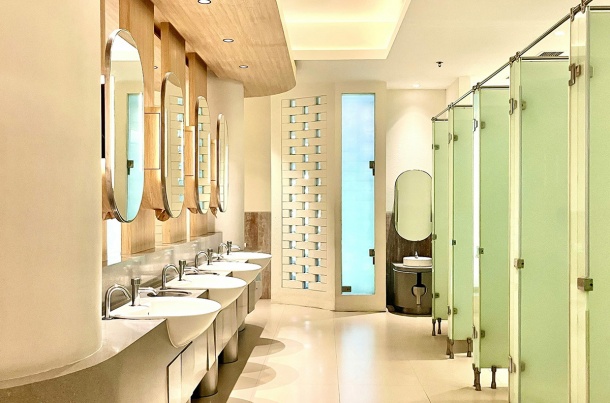
With the global pandemic just a few years behind us and with financial markets being constantly squeezed, how important are aesthetics in today’s away-from-home washroom design compared with other factors such as hygiene, functionality and efficiency, asks Ann Laffeaty?
Washrooms are basically functional spaces. They simply need to be clean, hygienic and fit for purpose. And this means their key role is to provide the wherewithal for people use the facilities and then wash and dry their hands afterwards.
But some hotels, restaurants and bars take a different approach and do everything they can to ensure that their washrooms are sufficiently attractive, quirky or opulent to provoke a reaction. They think nothing of equipping their facilities with marble sinks, expensive tiles, ornate mirrors or fancy artwork – not to mention decorative soap and paper dispensers.
But do such add-ons really matter? Or should aspects such as hygiene and functionality always be considered ahead of aesthetics in any washroom design?
Aesthetics can be very important in certain sectors, according to Principle Cleaning services operations director Mike Darmanin. “In hospitality venues such as hotels, restaurants and bars the washrooms become an extension of the brand experience,” he said. “Guests in these environments expect to find a space that reflects the quality and character of the venue. And this means that a poorly-presented washroom might immediately detract from what is otherwise a positive impression.”
Aesthetics can play an important role In corporate and commercial settings as well, he adds. “This is particularly the case in premium offices or buildings with a high footfall.
“A well-designed washroom signals that the organisation cares about the visitor experience and values the well-being of its employees. And people will notice when a washroom feels clean, modern and thoughtfully presented - regardless of the environment.”
An attractive washroom design will always make a good impression on the customer, Darmanin believes. “Washrooms are often one of the most telling areas of a facility,” he said. “Customers and visitors consciously and subconsciously judge organisations based on the cleanliness, upkeep and ambience of the washroom.
“An attractive design will not only enhance a positive first impression but will also reinforce trust: if a washroom is well-maintained and visually appealing, people will assume that the rest of the facility is too. It’s an essential part of the overall service journey.”
According to Darmanin there is a growing trend for well-designed, quirky or high-end washrooms to become part of the online conversation. “An aesthetically-pleasing washroom is likely to create a talking point and provide fodder for social media pages,” he says. “Whether it is a bold colour scheme, statement mirrors, unique lighting or innovative sustainability features, elements of an eye-catching washroom can drive publicity organically and reinforce a venue’s identity.”
Quirks and luxuries
Customers tend to respond particularly well to features such as quirks and little luxuries, says Darmanin. “Premium touches such as a luxury finish, a sensory experience or a creative décor will elevate perceptions and encourage positive feedback. In some sectors a standout washroom can even become a memorable feature in its own right and help to differentiate a venue in a competitive market.
"And while the washroom may not be the sole driver of new custom, it can be a compelling part of the value proposition and importantly, a reason for guests to share their experience with others.” Principle works with suppliers to provide modern dispenser ranges that deliver premium hand-washing and hand lotions sourced from social enterprises.
Aesthetics are an increasingly important consideration in away-from-home washrooms according to Vectair’s vice-president of marketing Chelsey Schwartz.“They directly influence the user’s perception and overall assessment of cleanliness,” she said. “While verticals such as hospitality, food service and leisure have traditionally placed greater emphasis on visual appeal, expectations have risen across all commercial environments including offices, healthcare and transport hubs.”
Aesthetics are less about decorative elements and more about how washroom products are designed to integrate into the space, she says. “Products with slim profiles and neutral finishes will allow facilities teams to maintain a consistent visual standard while supporting an efficient operation and compliance,” she explains. “As washrooms become a more visible extension of a brand or facility, product design plays a measurable role in perceived quality across all verticals.”
Washrooms are often one of the final touchpoints in the customer journey and have the power to strongly influence a person’s overall perception of a commercial space, says Schwartz. “For facility operators a well-designed washroom communicates professionalism, attention to detail and respect for the end user.
“From a technical perspective, visual simplicity and an unobtrusive product design will support this outcome by reducing visual clutter and reinforcing order and cleanliness,” she added. “Design
also extends beyond visual factors: for example, scent is a critical sensory component with studies consistently showing that odour control and fragrance can significantly influence perceived hygiene. When fragrance delivery is controlled, consistent and appropriately dosed it reinforces comfort and cleanliness without becoming intrusive, leaving a positive and lasting impression.”
Sleek design
Even in highly functional spaces customers increasingly notice and respond to washrooms that feel modern, cohesive and well-managed, says Schwartz. “A washroom that delivers a consistently positive sensory experience can become a point of discussion and informal promotion.
“From an operational perspective, this is typically achieved through sleek product design combined with discreet hygiene solutions. When aircare, surface care, hand care and urinal management products operate quietly in the background, the washroom feels calm and controlled rather than clinical. And this balance between performance and appearance elevates the user experience and naturally encourages positive feedback and sharing.”
Vectair’s washroom products are designed to balance an aesthetically pleasing design with hygienic performance and operational efficiency. The company’s SensaMist SM100 and V-Air Flow diffusers are designed to support consistent odour control while enhancing the overall customer experience.
Aesthetics play a key role in shaping people’s impressions of a hotel, bar or restaurant says Essity’s communications director Jenny Turner. “Research shows that poor washroom experiences can lead to negative reviews and even lost business,” she said.
A recent Tork Insight Survey revealed 38 per cent of people said they would spend less time at a hospitality venue where the washrooms had failed to meet their expectations while 20 per cent of respondents said they would not return to that venue - and 13 per cent would advise their friends against a visit.
“A well-designed washroom signals care and professionalism because the washroom is a reflection of the overall brand experience,” added Turner. “However, aesthetics should never come at the expense of hygiene or accessibility.
“So washrooms should look good while also being easy to use and comfortable for as many people as possible including those with visual impairments or neuro-sensitivities. For example, avoiding overly complex layouts and ensuring clear contrasts in colour can help visually-impaired users to safely navigate the space. In other words, attractiveness should always be paired with functionality and cleanliness.”
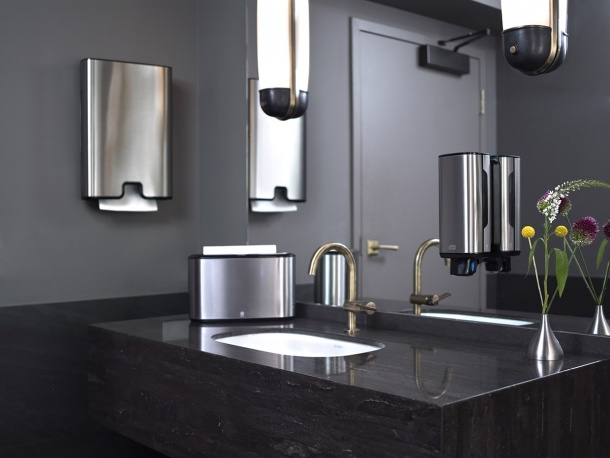
Essity’s Tork Image Design line has won a Red Dot Award for design and incorporates stainless steel touches said to elevate the washroom experience. All Tork dispensers are designed to be easy to clean, simple to refill and intuitive to use.
A striking washroom design can serve to spark social media attention, according to Turner. “Customers often respond very positively to washrooms that offer a sense of luxury or a unique, quirky décor,” she said. “A beautifully-designed washroom can create a real ‘wow’ moment, leaving a lasting impression that reflects well on the entire venue. This means an exceptional washroom experience can become a talking point and help put a venue on the map.”
Hand in hand
But do commentators feel that aesthetics in a washroom should take second place to factors such as hygiene, function and design? Aesthetics should always go hand in hand with functionality, Turner believes. “A washroom that looks great and that also feels comfortable with features such as intuitive touch-free dispensers is more likely to earn praise both online and offline,” she said. “The most successful washrooms must combine visual appeal, ease of use and operational efficiency and this involves designing spaces that are clean, comfortable and welcoming. The real win is when that quirky design is also practical.”
Principle Cleaning’s Mike Darmanin agrees that aesthetics and hygiene should not be seen as competing priorities. “We believe the most effective washrooms can seamlessly combine visual appeal with functionality, hygiene, durability and sustainability,” he said. “While the foundational elements of cleanliness, layout, ease of maintenance and product reliability must always come first, aesthetics are an essential layer that enhance user satisfaction.”





 RSS
RSS