



Home › magazine › latest news › Worst case scenario

Worst-case scenario
20th of November 2026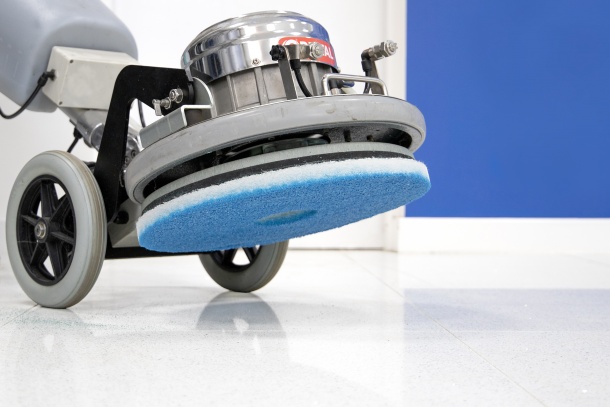
Water damage, scuffs, scratches, permanent stains – what is the worst-case scenario when it comes to hard floor care? ECJ asks companies about hard floor disasters and how they should be tackled.
FLOOR CLEANING ACCOUNTS for at least 25 per cent of the average cleaner’s time. Gravity dictates that any dust, grime or soil entering a building will inevitably settle on the floor. In a public facility, large numbers of people will also be marking and scratching the surface with their shoes, pushchairs and trolley cases. And anything dropped or spilled will also end up on the floor, causing mess and potentially damage as well.
Water damage is among the most critical threats for moisture-sensitive floors such as wood, parquet and organic laminates, according to Kärcher’s vice-president for floor care solutions Christian Mrowka. “Standing water or excessive moisture exposure during cleaning can lead to swelling, edge-warping, discolouration and eventual mould growth beneath the surface,” he said. “Even on non-porous tile or resin floors, standing water loaded with dissolved salts or chemicals can cause efflorescence, grout degradation and adhesive failure over time.”
Fine grit carried in on footwear will act like sandpaper and create a dull finish while also scratching protective seals, he continues. “Inappropriate cleaning agents such as over-dosed alkaline detergents on linoleum or harsh chlorine-based disinfectants can cause yellowing, brittleness and finish breakdown. Direct sunlight will cause colour fading, discolouration or embrittlement in elastic and synthetic floors. And heavy machinery, dropped tools or concentrated furniture weight can chip tiles, crack concrete screed or indent softer floor coverings.”
Chemical etching and deep staining also present significant challenges, Mrowka says. “Highly acidic substances such as citrus, vinegar or acidic cleaners can permanently etch calcitic natural stones such as marble and limestone by dissolving the mineral structure,” he said. “On porous floors such as unsealed concrete, terracotta or worn wood any dark liquids, oils or strong dyes can penetrate deep into the capillary network. And if left untreated these substances will bond chemically within the pores, making complete removal impossible without aggressive grinding or structural removal.”
Multi-tier approach
While scuffs and scratches from foot and wheeled traffic are among the most frequent issues, they are not hard to eradicate, he says. “Black heel marks, rubber shoe transfers and light abrasion usually only affect the sacrificial protective coating or polymer dispersion layer on resilient floors such as PVC or linoleum,” said Mrowka. “These issues can easily be treated through routine maintenance using scrubber dryers equipped with appropriate pads or single-disc machines using high-speed polishing or localised recoating.”
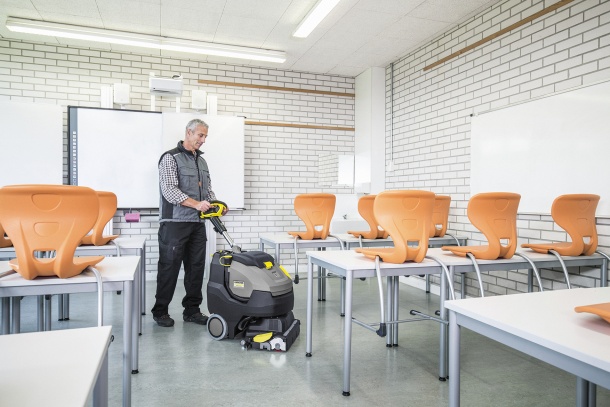
A professional floor care programme needs to take a structured, multi-tier approach, he says. “A high-performance entrance mat will help to trap abrasive grit and moisture before it reaches main floor areas, while preventative daily cleaning with a scrubber dryer will clean the floor and eliminate the standing water that causes damage.
“Any scuffs and light scratches should be regularly addressed by burnishing with a high-speed single-disc machine,” adds Mrowka. “And a periodic deep clean and coating renewal will strip away those worn polymer protection layers and perform deep stain-extraction.”
Kärcher offers a range of scrubber dryers that directly tackle water damage while also removing tough daily grime and shoe marks. The company also provides single-disc and polishing machines, deep cleaners and professional chemical care and roller and diamond pad systems.
The biggest threat to hard floors lies in customers failing to provide barrier mats, according to Prochem’s sales and technical development manager Jon Ewing. “They also need to carry out a daily maintenance regime because the impact from people walking through high traffic areas and scratching the surface is huge,” he said.
“Using the wrong products can lead to chemical damage and issues can also occur when cleaning machinery is used incorrectly - for example, when a rotary machine is employed at the wrong speed. However, all these problems can be eradicated if a floor care management plan is put into place from the very the start and if all managers and operatives are given training in hard floor care.”
Certain substances can cause permanent staining and ultimately ruin the floor, he says. “For example, supermarkets often choose terrazzo flooring but their managers will always want to open any new store as soon as possible so that they can start trading,” he said. “Terrazzo is semi-porous and ideally should be sealed first, but this step often gets missed.”
Problem spillage
This can become a major problem when a spillage occurs. “Staff will rush to fetch a mop and bucket to remove the ‘spillage in aisle four’, but they will quite often be too late,” Ewing said. “Substances such as red wine or fruit juice will have already been absorbed into the floor causing semi-permanent or even permanent stains.”
Chemical, impact and water damage are the main issues for any hard floor that has been inadequately maintained, he said. “End-user misuse of a rotary or scrubber dryer would also cause problems, so it is crucial that all operatives receive the correct training on how to use the machine and solutions correctly,” he said.
Water damage can be a serious problem for unsealed porous floors, says Ewing. “The water could penetrate beneath the floor causing tenting and warping, while mould, mildew and bacteria might grow underneath the floors - leading to rot and potentially requiring a full floor replacement,” he said.
Water damage can sometimes be rectified if dealt quickly and if it is dried out using professional dehumidifiers, he says. “A floor care management regime - instigated from day one - should incorporate daily, weekly and periodic cleaning to prolong the life of the floor,” he said. “And if the surface is protected with a seal or polish you will have already gone a long way to preventing gouges and scratches.”
Prochem offers a comprehensive one-day hard floor cleaning and maintenance course that covers all types of porous, semi porous and non-porous surfaces. The company also offers a range of floor care products including C502 Protreat, R602 Proseal and C503 Proshine.
Significant investment
The most severe damage a hard floor is likely to receive in its lifetime is anything that goes beyond the surface finish and affects the floor material itself, says Robert Scott sales director Alastair Scott. “Deep scratching, chemical damage, permanent staining or moisture ingress can all reach the point where cleaning alone will no longer restore the floor’s original appearance,” he said.
“Flooring represents a significant investment and premature replacement represents a potentially substantial cost. Correct care throughout its lifetime – and seeking expert floorcare advice to ensure the right processes and equipment are used – can help to protect that investment and extend the floor’s useful life.”
Scuffs and scratches are among the most visible problems in busy commercial environments, according to Scott. “However, there is an important distinction between a surface mark and physical damage,” he said.
“Scuffs and ingrained dirt can often be removed through appropriate cleaning. But spillages can potentially cause lasting staining or surface damage depending on the substance and flooring material.”
Spills need to be dealt with promptly using a method appropriate to the floor, he said. “An unsuitable chemical or an unnecessarily aggressive process could compound the problem, so the flooring manufacturer’s care instructions should always be followed,” said Scott.
Water can be particularly damaging to some floors where prolonged exposure may cause swelling, warping or discolouration, he said. “The key is to understand the flooring material concerned and to control both the cleaning method and the amount of moisture being introduced.”
Hard floors face a combination of footfall, dirt and grit, spillages, wheeled equipment and furniture movement throughout their working lives, Scott continued. “Fine grit and debris can be particularly damaging, creating an abrasive action as people and equipment move across the floor,” he said.
“Effective entrance matting and regular removal of debris therefore play an important preventative role. Incorrect maintenance can also cause damage if the wrong pad, machinery or cleaning method is used.”
He adds that many common problems can be solved or significantly improved with the aid of professional products and systems. “This is particularly true of surface soiling, scuffing, ingrained dirt or deterioration of the finish.”
Robert Scott’s Erase-all floor pads are designed to tackle stubborn, ingrained dirt and scuff marks using water. The company also offers entrance matting and sweeping products to help control abrasive debris; mopping systems for routine maintenance; and floor pads for cleaning, scrubbing, stripping and polishing.
Water ingress or flooding is the worst kind of damage a hard floor is likely to receive in its lifetime, says Truvox executive director Gordon McVean. “This is closely followed by deep mechanical gouging or a chemical spillage,” he adds. ”However, water ingress is fairly unlikely to occur unless there is a leak or burst water pipe.”
Scuffs and scratches caused by heels and wheeled traffic are common in high traffic areas. “Scratches from chair legs or people’s heels, grit and small stones could all lead to damage if not cleaned properly,” he said.
McVean says customers should tackle hard floor issues by getting to the root of the problem. “You need to identify the cause of any water damage and rectify it,” he said. “If it is a leak or burst water pipe, for example, get it fixed.
Address the causes
“And if you want to limit the level of scuffs, scratches and deep stains you must address the causes. Put pads on chair legs and mop up serious spills as soon as they happen so that they don’t have time to soak in.” The Truvox Multiwash PRO Steam system uses counter-rotating brushes to clean floors while the additional steam function also sanitises them.
So, are there any hard floor issues that are impossible to treat? Water damage is often irreversible, believes McVean. “This could lead to a new floor in a worst-case scenario, while any spillages of substances such as coffee, red wine, curry or cooking oil could all lead to permanent staining if not treated quickly,” he said.
Deep scratches, permanent staining and physical damage to the floor may not be reversible through cleaning alone, says Robert Scott’s Alastair Scott. “Knowing when to stop is important because increasing the level of abrasion simply because a mark remains in place could risk causing further damage,” he said.
In most cases it will not be possible to repair chemical damage through cleaning, according to Prochem’s Jon Ewing. “Permanent damage could also be caused by the incorrect use of a cleaning machine by an untrained operator,” he said.
And Kärcher’s Christian Mrowka agrees that some damage is irreversible. “Structural cracking in concrete tiles, deep acid etching on polished stone or swollen, delaminated timber or laminate floors cannot be repaired by cleaning alone,” he said. “In these instances mechanical grinding, full floor recoating, diamond polishing or partial floor replacement will be necessary.”





 RSS