



Home › magazine › latest news › Sweep dreams

Sweep dreams
23rd of November 2026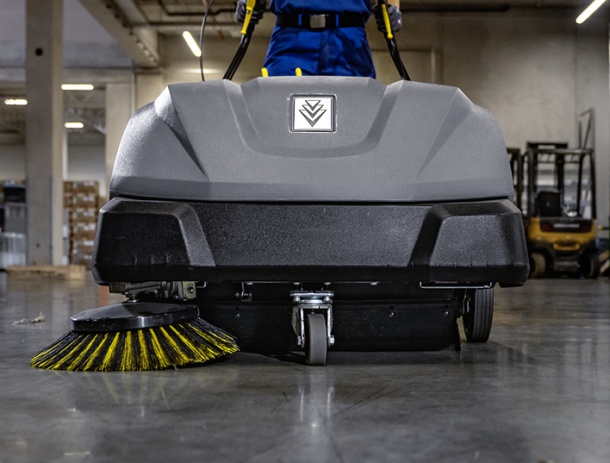
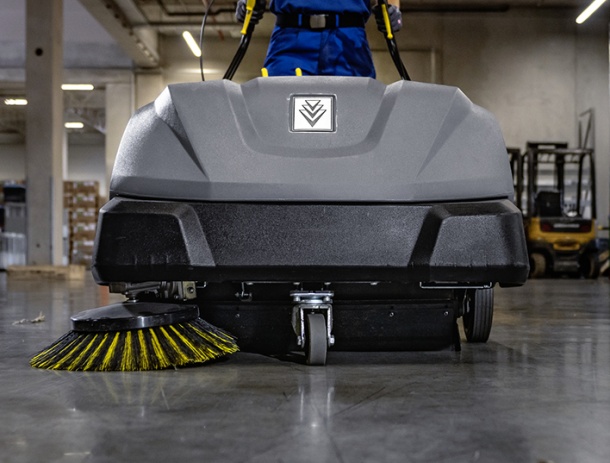
Manoeuvrability, productivity, ease of use, a large hopper capacity – what are the attributes that go to make a dream sweeper? And how far are manufacturers actually delivering on what customers want? Ann Laffeaty asks companies these questions.
THERE IS A HUGE VARIATION in the types of commercial sweepers on the market. Sweeping machines come in all shapes and sizes depending on the task for which they are designed. For example, some are required to operate in tight corners and restricted areas which means they need to be compact and highly manoeuvrable.
Others are designed to sweep vast areas of floor in a factory, warehouse, car park or road system. Qualities such as productivity and an efficient sweeping action are crucial here, and the hopper size also needs to be sufficiently large to accommodate vast quantities of debris.
But what does the average customer want most from today’s machines? And is there even such a thing as an ideal sweeper? Kärcher’s product manager for sweepers Daniel Friz believes a universal ‘dream sweeper’ does not exist. “It only becomes a ‘dream machine’ when it is precisely matched to the specific cleaning application for which it is intended,” he said. “The customer needs to take into account the surface area, spatial constraints, dirt volume and environmental conditions on the ground when they are making their choice.”
As far as contract cleaners and industrial operators are concerned the ideal sweeper needs to be able to deliver a high level of coverage, he says. “It should also offer flawless dirt collection capabilities, low operating costs and maximum reliability within its designated operational space,” he said. “Sometimes a special add-on kit will be needed to provide the perfect solution for the specific application.”
An efficient pick-up action is the fundamental baseline requirement for any dream sweeper, he adds. “Time is a critical cost-driver for building service contractors,” said Friz. “A sweeper needs to be able to reliably collect fine dust, heavy debris or grit in a single pass without leaving any residue behind because having to clean an area twice will directly degrade margins and inflate labour costs.”
He adds that optimal cleaning performance depends on matching the right sweeping method to the material to be cleaned away. “For example, an overthrow action would be ineffective when dealing with heavy, bulky debris while direct throw would be unsuitable for use with light materials such as leaves,” he said.
Other vital qualities of an optimal sweeper include an adequate hopper capacity and debris versatility, according to Friz. “This is particularly the case in large logistics centres, production sites and outdoor facilities,” he said. “A generous hopper volume reduces the amount of non-productive downtime spent driving to disposal sites. Furthermore, a sweeper needs to be able to handle everything from fine packaging dust to heavy gravel and fallen leaves to ensure a consistent year-round performance.”
Essential qualities
Manoeuvrability and intuitive controls are other essential qualities, he adds. “This is particularly true in congested industrial yards, underground parking facilities and narrow aisles,” he said.
“Furthermore a standardised, easy-to-understand control interface will reduce onboarding times and prevent costly user errors during daily operations because service providers often experience a quick staff turnover.”
A good sweeper should also prioritise operator health and dust suppression, he adds. “Effective dust control is critical to protecting operators and bystanders from inhaling hazardous airborne particles,” said Friz. “Certified fine-dust filtration systems, automatic filter cleaning and dust suppression technology will prevent dust clouds from forming during sweeping and dumping operations.”
Other crucial factors include adjustable seating on ride-on models, clear sight lines, low vibration levels and low noise to safeguard worker health and help reduce absenteeism, says Friz. “And a battery-electric drive will cut direct emissions and operational noise, allowing flexible indoor use or early-morning/night-time shifts in noise-sensitive zones,” he adds.
Reliable and efficient
Kärcher offers a range of options including manual push sweepers, walk-behind sweepers with traction drive: ride-on vacuum sweepers and heavy-duty industrial models. The company’s ride-on vacuums are said to offer tight turning radiuses, ergonomic seating and intuitive control panels while heavy-duty sweepers are engineered for use in tough industrial environments. These have high hopper capacities, heavy-duty steel frames and fully-automatic filter cleaning systems for a continuous dust-free operation.
A dream sweeper needs to be able to clean reliably and efficiently, says Hako’s application technology trainer and consultant Klaus Serfezi.“Although this may sound obvious it is crucial in day-to-day operations,” he said. “A machine needs to be able to deliver consistently strong results, operate economically and require as little maintenance as possible. And it should also be easy to operate.”
An efficient pick-up action also makes for an ideal sweeper, he says. “Dirt and debris needs to be collected as completely as possible in a single pass,” said Serfezi. “When this works well, operators save time and can cover areas more quickly. That is what really matters in everyday use.”
A large hopper is another real advantage, he adds. “This is particularly the case on larger sites because it reduces the number of interruptions required for emptying,” he said. “However, it is equally important that the machine is able to handle different types of debris. In practice, both the quantity and type of dirt can change constantly.”
The importance of other factors such as easy-to-operate controls and manoeuvrability in narrow streets depend very much on the application, he says. “Anyone working in a confined space or a complex environment will quickly realise how important manoeuvrability is,” he said. “Simple, intuitive controls also make the job easier. These types of factors make a noticeable difference to the operator - particularly during longer shifts.”
Dust control crucial
Effective dust control is also crucial during daily operations - particularly where people are present, he says. “An ergonomic workplace and intuitive controls help to reduce operator fatigue while easy access to components and short service times will simplify maintenance,” said Serfezi. “And, of course, a sweeper needs to be robust and capable of working continuously for long periods of time. Ultimately, the goal is for the machine to keep running productively with minimal downtime.”
Hako’s Sweepmaster line incorporates a variety of walk-behind and ride-on sweepers for both indoor and outdoor applications. These range from compact machines for smaller areas to high-performance sweeper vacuum machines for industrial, logistics and commercial environments.
So, how far do factors such as productivity, manoeuvrability and ease of use resonate with customers? And what do they want most from their ‘dream sweeper’?
Building service contractors and industrial clients tend to consider total cost of ownership when evaluating their purchasing decisions, says Kärcher’s Daniel Friz. “They also look at workplace safety standards before making their choice,” he said. “But while the initial purchase price remains a factor in competitive bidding, professional buyers will recognise other considerations such as high efficiency, worker health protection, reducing sick leave, robust reliability and ergonomics since these will all directly protect profitability and help to retain qualified personnel.”
Price is always an important consideration for customers, agrees Hako’s Klaus Serfezi. “However, many customers look more closely at the total cost of ownership and ask themselves: what will this machine cost me in day-to-day operation?” he said. “High cleaning performance, low operating costs and a long service life can all easily justify a higher initial investment. And operator comfort also plays a role, particularly when the machine is used for many hours each day.”





 RSS