




Home › magazine › latest news › SHC celebrates 30th anniversary with industry round table stakeholder lunch

SHC celebrates 30th anniversary with industry round table stakeholder lunch
17th of March 2026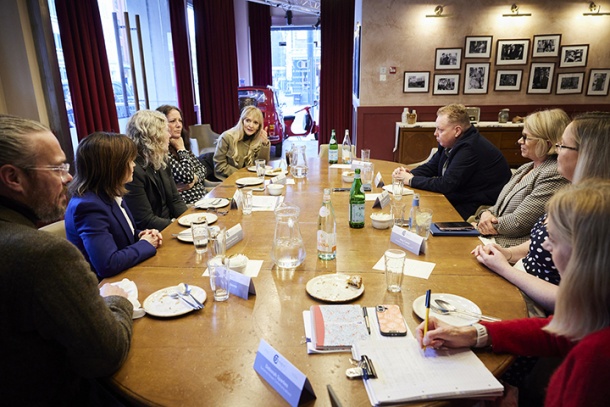
Suzanne Howe Communications (SHC) in the UK has marked the start of its 30th anniversary year with a stakeholder engagement lunch bringing together leading voices from across the professional cleaning and hygiene sector in London.
The communications consultancy, founded in 1996, hosted the event last month at a central London restaurant, inviting representatives from manufacturers, service providers, training bodies, media and specialist advisors to discuss the key trends, challenges and opportunities shaping the industry.
Guests included Ross Osbourne (MSC), Michelle Marshall (European Cleaning Journal), Rachael Carley (Carley Coaching), Sam Worden (NGB Clean), Kate Lovell (Cleanology), Hannah Taylor (The Lens Box), Neil Spencer Cook (BICSc), Amy Carter (Kimberly-Clark Professional) and Deborah Sparkes (Suzanne Howe Communications).
Held in an informal setting, the lunch was designed to facilitate open discussion around sector pressures, the role of frontline operatives and how the industry can better demonstrate social value. The event also formed part of SHC's journey towards B-Corp certification, with participants exploring how B-Corp principles align with current and future expectations in the cleaning and facilities markets.
A central theme was stakeholder identification and engagement. Attendees agreed that stakeholders span the full ecosystem: cleaning operatives, management teams, suppliers, clients, media partners, charities and social enterprises, as well as building owners and facilities managers. While many organisations are developing clearer career pathways there was consensus that, for most operatives, priorities still centre on fair pay above the minimum wage, credible training and visible progression opportunities.
Speakers highlighted that social enterprises and suppliers can introduce programmes that improve conditions for operatives, but sustained change depends on collaboration across all stakeholder groups. The long-term development and recognition of cleaning operatives were seen as critical to improving standards, retention and overall sector reputation.
When asked what large organisations should focus on to improve operative satisfaction, participants pointed to the need for both financial and cultural shifts. Paying above the minimum wage was identified as an immediate lever but it was noted that many businesses still struggle to reconcile enhanced pay with profit expectations. Alongside remuneration, there were calls for a broader revaluation of the role of cleaning, particularly in high-risk environments such as healthcare where robust hygiene is fundamental.
Participants also observed that building managers and property owners are in a strong position to drive improvements but can be reluctant to alter established models. While the pandemic briefly elevated the profile of cleaning services, public and corporate recognition has largely reverted to pre-pandemic norms.
Recognition schemes were identified as one way to address this imbalance. Expanding the scope of established awards, such as the Kimberly-Clark Professional Golden Service Awards and the European Cleaning & Hygiene Awards, to highlight building owners and other stakeholders could help raise the profile of cleaning within the wider property and facilities chain. Delegates also underlined the importance of robust research and data to evidence the value of high-level cleaning and justify increased investment.
On market trends, social impact was singled out as a key strategic consideration, particularly in labour-intensive sectors where frontline staff account for the majority of the workforce. With estimates suggesting that around 80 per cent of people employed in cleaning businesses are operatives, the attendees argued their welfare and engagement should sit at the heart of business strategy rather than being treated as a secondary concern.
The group noted that data collection on performance, sustainability and social procurement has become more sophisticated, but questioned whether the insights are always translated into tangible outcomes. There was concern that tracking and reporting can sometimes prioritise innovation and metrics over meaningful improvements in sustainability, working conditions and community impact.
The group called for clearer accountability and measurable impact from social value initiatives, citing practical examples such as sustainable cleaning practices and staff-focused programmes that support wellbeing, skills and community engagement.
The role of industry bodies in driving progress was also discussed. Collaboration with them was highlighted as a route to promoting social responsibility, professional standards and operational excellence.
Attendees also suggested that targeted campaigns and PR activity could help raise awareness of social value and sustainability within key customer segments, including education, hospitality (HoReCa), facilities management and retail. By positioning cleaning as a strategic contributor to wellbeing, productivity and environmental performance, the sector aims to strengthen its voice in property and operational decision-making.





 RSS
RSS