


Home › magazine › june july 2026 › latest news › Reimagining washrooms and creating value

Reimagining washrooms and creating value
16th of July 2026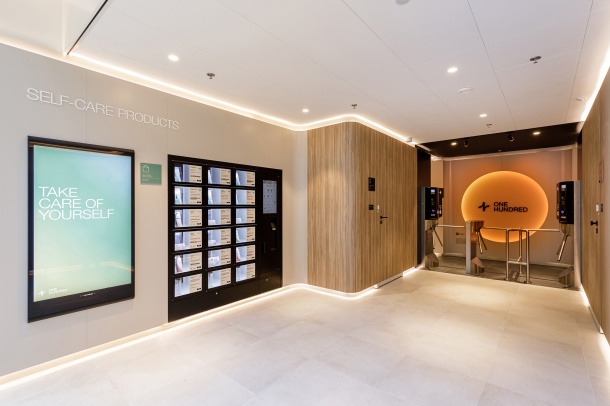
Public washrooms are rarely associated with wellbeing. More often they are viewed as a necessity - functional spaces that attract attention only when something goes wrong. Yet for Dutch operator ONE HUNDRED restrooms, the washroom represents something quite different: an opportunity to improve customer experience, support wellbeing and demonstrate how design, hospitality, cleaning and technology can work together to create value.
FOUNDED IN 2017, the company has challenged conventional thinking about public washrooms. Its facilities, located in shopping centres, transport hubs and motorway service areas across Europe, are built around a proposition that remains relatively unusual in many markets: that people value clean, comfortable and welcoming washrooms and are willing to pay for them.
The concept extends beyond cleanliness. Lighting, music, scent and materials are carefully selected to create what the company describes as a moment of wellbeing within a busy day. Rather than serving solely as functional facilities, the washrooms are designed to provide a brief pause from the surrounding environment.
“We believe it starts with caring about the washroom,” says co-founder and chief brand officer Marielle Romeijn. “If you think about who is visiting and what they need, and spend a little more time considering how to make the experience comfortable, it changes everything.”
Delivering that experience consistently across more than 80 locations and millions of annual visitors requires more than attractive design. ONE HUNDRED combines cleaning, hospitality, facility management and technology within a single operating model. According to Romeijn and brand innovation manager Anne Moeskops, this integrated approach has enabled the company to expand internationally while maintaining a recognisable brand and service standard.
The company believes public expectations are changing. Consumers increasingly judge shopping centres, transport hubs and hospitality venues by the quality of the environments they provide. In that context, the washroom has become an important customer touchpoint rather than an afterthought.
“If I go to a restaurant and the washroom is not clean or not pleasant, it affects how I feel about the whole place,” says Moeskops. “I may not come back.”
This relationship between washroom quality and customer perception lies at the heart of the company’s philosophy. While visitors may not choose a destination because of its toilets, a poor experience can negatively influence how they view the venue. Conversely, a clean and welcoming facility can reinforce positive impressions and encourage visitors to return.
Customer experience
The approach reflects wider trends across the built environment. As landlords, retailers and hospitality operators focus increasingly on customer experience, physical spaces are expected to offer more than functionality. ONE HUNDRED argues that public washrooms should be part of this evolution.
Its facilities typically include accessible toilets, baby-changing areas and family facilities, alongside sensory elements intended to create a calmer atmosphere. Music softens the environment, lighting feels less clinical than in traditional public washrooms and materials are chosen for both durability and visitor comfort.
The company’s philosophy also shapes its approach to staffing. Frontline employees are known as members of the ‘Comfort Crew’ - a title intended to reflect their broad-based role in creating and maintaining the visitor experience. “The fact that we call them Comfort Crew is important,” says Romeijn. “We give them a nice uniform, they work in a pleasant environment and they are part of the visitor experience.”
Rather than treating washroom maintenance as a series of scheduled cleaning tasks, the company operates its locations more like hospitality environments. Staff remain present throughout opening hours - monitoring conditions, maintaining cleanliness, welcoming visitors and responding immediately to any issues.
According to Moeskops, these teams are critical to the operation. “They are the key to maintaining our standards and representing the brand,” she says.
ONE HUNDRED invests heavily in training, communication and employee support. Site managers oversee individual locations and act as a link between operational teams and head office, while field coaches travel between sites, monitoring standards, gathering feedback and helping teams respond to operational challenges.
“We know people by name,” says Romeijn. “We invite them to Christmas parties, we ask for feedback and we really try to build relationships.”
For Romeijn, employee engagement is essential. Consistent service across dozens of sites cannot be achieved through audits and checklists alone. It requires people who understand the purpose behind the concept and feel ownership of the environments they manage.
As the company expands across Europe, maintaining consistency becomes increasingly challenging. Different labour markets, regulatory frameworks and cultural expectations require strong operational systems and effective people management. Technology has therefore become a central part of the business. “Without the technology we would be blind,” says Romeijn.
Behind the customer-facing experience sits a digital infrastructure that monitors performance across the network. Visitor ratings, QR-code feedback, maintenance requests, incidents and service-level performance are collected and analysed through central dashboards, providing managers with real-time visibility across multiple countries.
The data allows cleaning schedules, staffing levels and consumable replenishment to be aligned more closely with actual demand. Understanding visitor flows and usage patterns helps improve efficiency while maintaining service quality. Technology also supports contractual performance by tracking response times and maintenance obligations. However, Romeijn stresses that data alone does not create great customer experiences. Human intervention remains essential.
If an issue with standards arises, the company follows a structured escalation process involving site managers, regional teams and head office. For locations requiring more significant intervention, ONE HUNDRED deploys a specialist ‘flying cleaning team’ responsible for deep cleans and operational resets. Romeijn explains: “We do a deep clean, provide the training again and then work together to improve.”
For the company, cleanliness is not a standalone objective but part of a wider promise to visitors. The challenge is not simply to clean facilities but to maintain environments that consistently feel welcoming, safe and comfortable regardless of location or visitor volume.
Public wellbeing
The company is also exploring how washrooms can play a broader role in supporting public wellbeing. Alongside toilet facilities, some locations provide additional services including hydration stations offering chilled drinking water and facilities that support basic health monitoring and self-testing. For Moeskops, this reflects an opportunity to think differently about how public washrooms are used. Rather than functioning solely as sanitation facilities, they can become part of a wider wellbeing infrastructure.
The same thinking informs the company’s approach to accessibility and inclusion. While compliance with legislation is a basic requirement, ONE HUNDRED aims to go further by considering how different groups experience the space. Accessible toilets, family facilities, baby-changing areas and unisex options are incorporated wherever possible.
This focus aligns with the company’s broader philosophy of care. Creating a positive experience for every visitor means considering comfort, privacy, safety and the overall sensory experience as well as physical accessibility.
Sustainability is another important component of the operating model. As a business managing high-traffic facilities, ONE HUNDRED is conscious of the environmental impact associated with water use, energy consumption and consumable products. Water-saving taps and flushing systems have been introduced throughout the network, helping reduce resource consumption without compromising
user comfort. The company has also partnered with the Made Blue Foundation, linking water consumption within its facilities to projects that provide access to clean drinking water in communities around the world.
For Romeijn, sustainability must be embedded within daily operations rather than treated as a separate initiative. As landlords, retailers and transport operators place increasing emphasis on environmental performance, measurable outcomes are becoming an important part of the value proposition.
The company’s ability to combine customer experience, operational efficiency and sustainability has attracted growing interest from property owners and operators across Europe. “I think we have now reached a point where we have enough key accounts to show that we are credible,” says Moeskops. “We also get companies approaching us because they have seen the concept and want to talk to us about bringing it to their locations.”
Many of these organisations are reassessing the role of washrooms within the customer journey. Shopping centres, transport operators and motorway service providers increasingly recognise that visitors evaluate destinations based on every aspect of the experience.
Partnerships have therefore become central to ONE HUNDRED’s growth strategy. The company works closely with landlords, retailers and service operators - adapting its concept to different environments while maintaining its core operational principles.
One example is its collaboration with Fastned, the expanding electric vehicle charging operator. As Fastned developed a new generation of charging hubs incorporating hospitality elements, it sought a washroom concept aligned with its brand while benefitting from ONE HUNDRED’s operational expertise.
Rather than applying a standard design, the two companies developed a bespoke concept featuring different colours, finishes and visual elements. The resulting facilities retain ONE HUNDRED’s operating model while reflecting Fastned’s customer-facing identity.
“They wanted something unique,” says Moeskops. “The collaboration has created a completely new opportunity for us.”
The project illustrates a wider shift within facilities management. Increasingly, clients are seeking partners capable of delivering customer experience alongside operational performance. Cleaning, maintenance, design and brand identity are becoming more closely integrated.
Charging for access
This changing perception is also evident in the debate surrounding paid public toilets. In many countries, charging for access remains controversial. Critics argue that sanitation should be free, while supporters point to the challenges of maintaining high-quality facilities without sustainable funding.
Romeijn believes the debate often overlooks the relationship between investment and quality. “There is often an assumption that visitors don’t want to pay,” she says. “But that assumption is usually wrong.”
Research conducted by the company suggests that consumers across several European markets are willing to pay for facilities that are clean, comfortable and well maintained. The challenge, Romeijn argues, is that many people associate paid toilets with poor experiences.
“If people pay and still have a bad experience, it is a double disappointment,” she says. “That is not good for our business because it creates the idea that paid toilets are not worth it.” For ONE HUNDRED, charging is not an objective in itself but a funding mechanism that supports investment in staffing, maintenance, technology and customer experience.
Looking ahead, Europe remains the company’s primary growth focus. Each market presents different challenges, but Moeskops believes growth often starts with a single successful location. “That is often the beginning of something exciting,” she says.
For cleaning and FM professionals, ONE HUNDRED offers an insight into how public washrooms may evolve in the years ahead. Its combination of dedicated frontline teams, data-driven operations, inclusive design, sustainability initiatives and wellbeing services represents a model that extends beyond traditional perceptions of cleaning and maintenance.
Ultimately, Romeijn and Moeskops are working to redefine what a public washroom can be, challenging property owners and facilities managers to think differently about one of the most frequently used spaces within the built environment.





 RSS
RSS