




Home › magazine › product features › Hygiene in food preparation: kitchens made easy

Hygiene in food preparation: kitchens made easy
8th of July 2026
Cleaning needs to be quick and thorough in any food service environment. But cleaning systems must be user-friendly, too, so that all operatives feel motivated to carry out essential sanitisation tasks. Ann Laffeaty asks companies about the systems they offer that are easy to use, ergonomic and kind to the hands.
KITCHENS CAN BE challenging work environments. Space is often restricted which means operatives will be constantly getting in each other’s way as they carry out their high-pressure tasks.
They also need to clean as they go to ensure that all surfaces and equipment – and their hands – are kept free from contamination. And working against the clock makes this difficult to achieve.
These intense time pressures when working in a relatively confined space can be a major issue, says Greenspeed brand marketeer Julie Van Praet. “Such conditions can lead to inefficiencies and increased physical difficulties. Many traditional cleaning products also contain aggressive chemicals which means they are harsh on the hands and the respiratory system. This can cause skin irritation and other long-term health issues. And we see frustration caused by materials that wear out too quickly and by products that are difficult to dose correctly.”
Essential hand hygiene is often hindered by products that irritate the hands, Van Praet added. “Staff may be less inclined to follow hygiene protocols to the letter as a result.”
Poorly-placed dispensers, non-intuitive systems and products that run out unexpectedly can lead to inefficiencies while also increasing the risk of errors, she adds. “Other challenges include the physical strain from using inefficient tools and the mental stress caused by working with frustrating systems.
“User-friendly alternatives allow staff to focus more on the result rather than on how to clean. And this not only improves effectiveness, it also enhances their job satisfaction.”
Complex or unclear systems often result in incorrect usage which can compromise hygiene standards, she says. “This is why it is important not to overcomplicate kitchen processes.”
Greenspeed’s microfibre systems are designed to offer maximum efficiency with minimal physical effort. The company also offers smart dosing systems and ergonomic tools said to be intuitive to use.
Food hygiene operatives are frequently asked to perform miracles in cramped spaces and within narrow time windows, according to Vikan’s North American hygiene specialist Jack Burnett. “When the equipment supplied for cleaning is heavy, poorly designed or difficult to reach, the immediate result is human fatigue,” he said. “But the hidden result is a missed corner where a bacterial colony could set up a permanent residence. Bacteria will exploit any gaps in the cleaning protocol – and these may be caused by tools that are too frustrating or cumbersome to use correctly.”
Hand hygiene is often the first casualty of a busy kitchen shift, Burnett added. “Beyond the time crunch, operatives often face physical barriers at the sink itself. We often see high rates of infractions where hand-washing sinks are being used for the improper disposal of food waste, the rinsing of wiping cloths or even as temporary storage for dirty pans.
“When the sink is blocked or the necessary tools are missing, the operative is forced to make a choice between hygiene and the clock.”
All tools and systems need to be designed with human behaviour in mind, he believes. “A cleaning regime that is not user friendly is destined to fail over time,” he said. “If we make the most effective cleaning method also the easiest and most intuitive we will ensure consistency and prevent cross-contamination.”
Non-ergonomic tools force operatives into awkward postures and can lead to musculoskeletal disorders, Burnett explains. “These become a threat to the sanitary integrity of the kitchen. When a wrist is throbbing from an ill-designed scoop or brush, that worker is significantly less likely to perform the rigorous physical scrub required to disrupt stubborn biofilms. So physical exhaustion effectively increases the likelihood of cross-contamination.”
Vikan’s HyGo mobile cleaning station is designed to ensure the right tool is always within reach. The company’s new microfibre mop heads are claimed to require less physical exertion on the part of the operator than other systems. And Vikan buckets have ergonomic handles and a pouring lip that have been designed that prevent the awkward manoeuvres that can lead to wrist strain.
Consistency vital
Time pressures, workflow interruptions and a lack of organisation can make it difficult to maintain consistent hygiene in a food preparation environment, says Essity’s communications director Jenny Turner. “The limited space makes movement and cleaning difficult, while poorly-placed materials can slow down workflow and cause frustration,” she said.
She agrees with other commentators that hand hygiene compliance may be compromised where products are harsh on the skin when used frequently.
“User friendly systems directly support speed, consistency and compliance,” she said. “When products are intuitive, ergonomic and simple to maintain, staff clean more effectively and with fewer errors. This not only improves operational efficiency but also strengthens food safety practices.”
However, poor products could lead to irritation from harsh soaps and increased physical strain caused by awkward dispenser placement and heavy manual cleaning, Turner says. “Other potential consequences are burnout and fatigue caused by performing tasks inefficiently or repeatedly due to ineffective tools.”
The Tork 2 in 1 Scouring and Cleaning Foodservice Cloth reduces physical strain on the operator and ensures the fast and efficient removal of grease. The company also offers Tork Odour-Control Hand Soap which is gentle, non-perfumed and suitable for frequent use. This has been designed to remove greasy residues and tough food odours from the hands.
Time pressures
The need for high hygiene standards, stubborn dirt and extreme time pressure are among the typical problems facing operatives when carrying out a kitchen clean-up according to Kärcher’s senior cleaning solutions consultant Gundula Braun.
“Intensive cleaning is required for removing burnt-on grease and organic residues, yet the structural layout of a kitchen often features narrow aisles and fixed installations that limit manoeuvrability,” she said.
“Furthermore, the efficiency of the entire process could be compromised if the cleaning technology is too complex to set up or if the necessary resources are not centrally accessible.”
Hand hygiene is a critical component of food safety, says Braun. “However, frequent washing cycles with unsuitable or low-quality soaps can lead to skin irritation and long-term dermatological issues,” she explained. “From an organisational standpoint the placement of dispensers is often not optimised for natural workflows, leading to a disruption in the hygiene chain.
“And a lack of monitored supply levels resulting in empty soap or paper dispensers during peak times can pose a significant risk to compliance.”
User-friendliness is not merely a convenience; it is a prerequisite for process reliability, she said. “In an industry characterised by a high staff turnover and diverse language backgrounds, cleaning systems need to be intuitive and convenient to use. “If a procedure is easy to understand and execute, the likelihood of application errors decreases.”
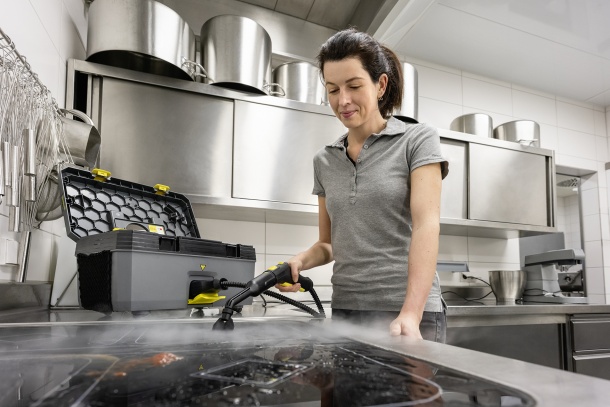
Kärcher offers a complete range of scrubber dryers, steam cleaners and high-pressure cleaners plus manual tools and cleaning trolleys for kitchen hygiene. These include intuitive mops such as the Infinity system as well as scrapers, squeegees, buckets and ergonomic floor and surface scouring pad holder systems.
A lack of space and tight schedules between shifts are among the most critical problems facing kitchen operatives, says Filmop’s business development manager Paolo Scapinello. “Often the cleaning equipment is too bulky to be easily moved between preparation benches or is difficult to use and requires excessive physical effort,” he said.
“If sanitisation points are not correctly positioned in the workflow, staff tend to skip these steps. And using bins or dispensers that require manual contact poses a serious risk of cross-contamination where hygiene must be at its highest.”
Another common obstacle is the difficulty in removing greasy dirt and smudges from stainless steel and glass surfaces, says Scapinello. “Staff often have to repeat the process multiple times which generates frustration and wastes time.”
User-friendliness is key to ensuring that cleaning is carried out correctly, he believes. “If a system is light and intuitive, the operator is not tempted to cut corners or skip steps which will dramatically reduce human error. Simple usage guarantees constant hygiene standards, regardless of fatigue or the speed required by the service.”
Physical effort
Non-ergonomic solutions are the main cause of musculoskeletal disorders, leading to frequent sick leave and suffering for workers, according to Scapinello. “For example, traditional wringing requires physical effort which causes strain to the back and the arms.”
Filmop’s Twice double bucket features independent drain-plugs that allow operators to empty the dirty water directly into floor drains without having to lift the heavy bucket. The Brilliant system is designed for streak-free cleaning of stainless steel and glass surfaces in just one pass. And the company’s Boost is a flat wringer that relieves the operator’s back and arms from the repetitive strain of mop wringing.
So what are the chief benefits of supplying user-friendly and ergonomic products for cleaning and hand hygiene in the kitchen? It demonstrates a respect for the workers, says Scapinello. “When operators see the company invests in solutions that will not strain their backs or wrists they will feel valued and more motivated to keep their working environment clean,” he said.
Kärcher’s Gundula Braun believes there is a clear correlation between the quality and accessibility of the equipment provided and employee motivation. “When operatives are equipped with ergonomic and effective tools within easy reach it conveys a sense of professional appreciation,” she said.
Evidence shows that kitchen staff feel happier and more motivated when working in a well organised environment with reliable hygiene tools, agrees Essity’s Jenny Turner. “Easy to use solutions reduce stress, minimise time wasted in searching for supplies and empower staff to complete tasks effectively,” she said.
Vikan’s Jack Burnett also feels that the provision of professional, high-quality tools can lead to a psychological boost for staff. “It signals the fact their work is valued and their role in maintaining hygiene is a critical part of the operation rather than a menial chore,” he said.
And solutions that are logical, ergonomic and pleasant to use makes employees feel supported, says Greenspeed’s Julie Van Praet. “Motivation increases when people feel their well-being is taken seriously, and this contributes to a more positive work experience,” she said.





 RSS
RSS