



Home › magazine › latest news › Soap dispensers in public toilets could be hiding deadly bacteria

Soap dispensers in public toilets could be hiding deadly bacteria
8th of March 2019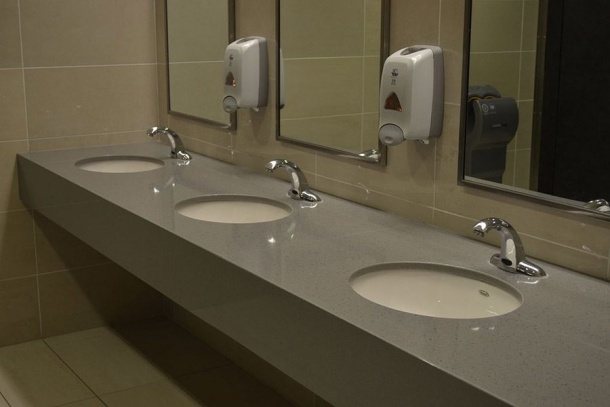
Tests carried out at the University of Arizona have suggested that soap dispensers could be harbouring potentially dangerous bacteria.
Germ specialist Dr Charles Gerba analysed soap dispensers in 296 food establishments across Arizona, Ohio and New Jersey. And he discovered that 15 per cent tested positive for harmful bacteria including E. coli and salmonella.
Also found in the dispensers was klebsiella oxytoca, a superbug that attacks the skin and flesh and can even be deadly. The bug also causes fevers, coughs, chills, pneumonia, flu-like symptoms, infections and difficulty swallowing and breathing.
"Lliquid soap can become contaminated with bacteria and poses a recognised health risk in healthcare settings," states Gerba in his report. "In particular, bulk-soap-re?llable dispensers are prone to bacterial contamination, and several outbreaks linked to the use of contaminated soap in healthcare settings have been reported."
He says the US-based Centers for Disease Control and Prevention advises people not to add soap to a partially empty soap dispenser. "This practice of ‘topping off' dispensers can lead to the bacterial contamination of soap," he said. "Sealed-soap-dispensing systems, in contrast, are typically re?lled by inserting into the dispenser a new bag or cartridge of soap that usually includes a new nozzle."
However, he adds that the public risk to health associated with contaminated bulk-soap-re?llable dispensers remains unclear.
"It would be very dif?cult if not impossible to trace the source of a community-acquired infection back to contaminated soap in a public restroom," he said. "Therefore a greater understanding of the potential for bacteria from contaminated soap to remain on the hands and to be transferred to secondary surfaces after washing with contaminated soap is needed."





 RSS
RSS