



Home › magazine › april may 2026 › latest news › Spain focus: “We focus on innovation, transparency and raising awareness”

Spain focus: “We focus on innovation, transparency and raising awareness”
11th of May 2026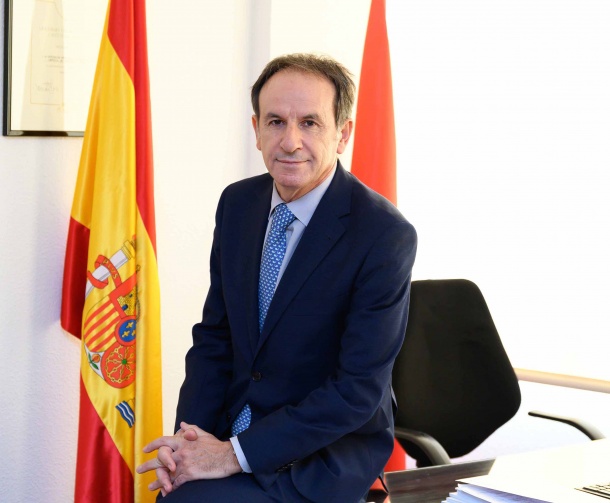
Spain is the host country for this year’s European Cleaning & Hygiene Awards (founded by European Cleaning Journal), with the gala dinner taking place in Palma de Mallorca on October 8. In this special piece for ECJ, president of contract cleaning associations AFELIN and AELMA Jesús Martín tells us more about the country’s cleaning sector.
Tell us some key facts and figures about the Spanish professional cleaning sector.
The cleaning industry accounts for 1.05 per cent of the national GDP and comprises over 40,000 companies, 95 per cent of which are SMEs. It is a highly fragmented industry because it is seen as an alternative form of self-employment for many workers. Most companies, around 36,000 according to the census, are micro-SMEs, between one and five employees. Only 12 per cent of companies have more than five employees.
In terms of turnover, the latest available data corresponds to the DBK Industry Observatory Report for 2024 and shows that cleaning companies in Spain achieved a turnover of €14.575 billion, representing a growth of 6.3 per cent over the previous year.
What is the profile of the workforce in this industry?
In terms of employment, we are a clear generator of jobs. In Spain, the cleaning industry employs 540,000 workers, 81.6 per cent of whom are women. The majority are employed in operational tasks, but the percentage of women in middle management (HR, marketing, purchasing, etc), as well as in senior management, is increasing, although it is still far from achieving parity.
This industry clearly generates job opportunities for groups that face difficulties entering the labour market, such as people with low levels of formal education, groups with some type of disability, people at risk of social exclusion and immigrants from up to 100 different countries. This diversity of profiles makes this industry inclusive and diverse in terms of employment.
Which customer segments are currently the main drivers of demand?
Currently, demand is concentrated in all areas where hygiene, image and quality are not only regulatory requirements, but also essential conditions for economic activity and public health.
In addition to the private, the public sector continues to be a key player, as 40 per cent of our industry’s turnover depends directly on the public administration.
What are the prevailing trends affecting cleaning companies in Spain in 2026? Where are the opportunities for growth and what are the most challenging aspects?
One of the predominant trends we are seeing this year is the consolidation of sustainability as a strategic priority. Environmental requirements are no longer just a matter of reputation, but have become a determining criteria in contracting,especially in the public sector and in large private corporations. Reducing environmental impact, using eco-friendly products, optimising water and energy consumption, and ensuring process traceability are now part of the competitive standard.
Adding to this evolution is the accelerated digitisation of services. Companies are incorporating monitoring tools, smart planning, real-time quality control and process automation to offer more efficient and measurable services. Technology - including the progressive implementation of AI-based solutions - does not replace the human component of our industry, but it does complement it, improve organisation and increase productivity. These are all key aspects that help an industry whose profit margins are increasingly slim.
Significant challenges
Alongside these opportunities, the industry faces enormous challenges. The current Economic Deindexation Law continues to cause a gap between actual costs and public contract prices, compromising the viability of many companies, particularly SMEs, which make up the vast majority of the industry’s business landscape. In addition, there is a structural problem that we have been facing for years - namely high absenteeism - which puts pressure on staff, increases costs and makes it difficult to organise a service that depends directly on the effective availability of personnel.
Furthermore, the lack of generation turnover and the difficulties in attracting young talent pose a strategic challenge that we must address urgently if we want to ensure the future sustainability of the industry.
What progress would you like to see AFELIN and AELMA make in Spain - and at the EU level - that would have a positive impact on the cleaning industry? What are the associations’ main objectives for this year?
I consider it a priority to move towards a more balanced and realistic regulatory framework. It is essential to review the Public Sector Contracts Law to introduce mechanisms that allow for automatic price updates when mandatory wage increases occur and to reinforce quality criteria in the face of the almost exclusive predominance of price. Without a public contracting model that guarantees reasonable margins, service quality and business stability are being seriously compromised.
Clear objectives
In addition, the amendment or repeal of the Deindexation Law, as I have already explained, is an important issue, because no labour-intensive industry can withstand years of cost increases without the possibility of contractual review.
At the European level, greater institutional recognition of the cleaning industry as a strategic activity directly linked to public health and economic resilience would be desirable.
Our objectives are clear and aligned with this vision. We want to consolidate institutional dialogue to advance regulatory reforms that provide legal certainty and economic stability, strengthen the unity of the industry throughout the country, promote professionalisation and continuing education, improve the social perception of our activity, and reinforce the tools that facilitate the attraction of talent.
In short, our purpose is to guarantee the viability of companies in order to protect jobs and ensure that the essential services we provide continue to be delivered to the highest quality standards.
How would you describe the level of professionalisation in the industry? Does it have a good reputation in the business world in Spain? And does it receive the recognition it deserves as an essential service, provided by qualified professionals?
If we analyse the evolution of recent years, we can categorically state that the cleaning industry has made significant progress in terms of professionalisation. Today, we are a long way from the simplified perception that reduced our activity to a purely manual task. Nowadays, we are referring to a highly organised industry, with specific training programmes, professional certifications, quality protocols and increasingly demanding risk prevention systems.
In Spain, for example, we have the Professional Cleaning Card, an accredited certification that formally recognises employees’ qualifications and skills. These types of tools help dignify the industry, raise service standards, and ensure that those who work in this field are adequately trained.
At AFELIN, we have also promoted the Official Register of Cleaning Companies (ROEL), a necessary initiative for regulating the market and differentiating those companies that scrupulously comply with labour, tax, and social regulations. The ROEL is not only a tool for transparency, but also a defence mechanism against unfair competition that has damaged the industry’s image for years.
Essential but undervalued
However, does the cleaning industry enjoy the reputation it deserves? We have undoubtedly made progress, but we are still struggling with decades of perceived low visibility. For many years, cleaning has been an essential but undervalued service, present in all areas - hospitals, schools, offices, industries, public spaces - and yet rarely recognised as strategic. We are taking steps in the right direction, but this cultural transformation will take years of work.
Spain has extraordinary standards of cleanliness, recognised internationally in both the public and private sectors. Our country is a benchmark in industries such as tourism, healthcare and manufacturing, where hygiene standards are crucial. However, for this excellence to be fully recognised, society and the business community need to see cleaning for what it really is: an essential service directly linked to the economy, health and overall productivity.
The pandemic was a turning point. At that critical moment, cleaning was directly associated with public health. Our professionals were on the front line, ensuring safe environments, minimising risks, and contributing to the continuity of business activity. That period highlighted the real importance of the industry. However, the challenge now is to consolidate that recognition and prevent it from fading over time.
Making progress
We are making great efforts to professionalise our activity and convey an image of quality, reliability and commitment. We have made progress, but there is still a long way to go. Full recognition will come when the industry is perceived as strategic for the economy and social wellbeing. And to achieve this, we need to continue to focus on training, innovation, transparency, self-regulation and raising awareness.




 RSS
RSS