



Home › magazine › april may 2026 › latest news › Business: throwaway culture driving fashion

Business: throwaway culture driving fashion
22nd of May 2026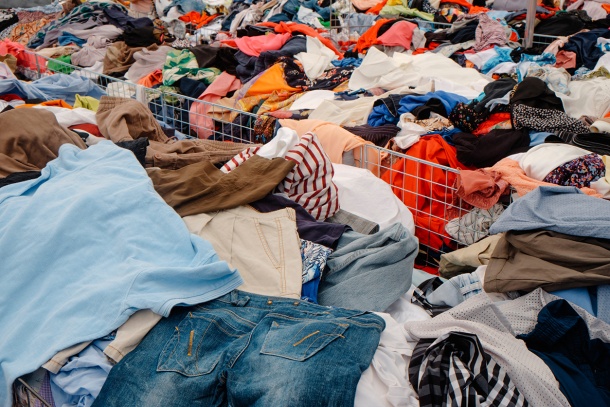
Tough new measures clamping down on wasteful business practices are being rolled out across Europe. And their first major focus has exposed the throwaway culture driving the region’s €300 billion fashion industry, reports Hartley Milner.
The clothing sector generates around 12.6 million tonnes of waste material in the EU every year, equal to 16 to 19 kg per person, and less than one per cent is recycled back into new clothing. But the big reveal is the industry’s long-held “dirty secret” … that around four to nine per cent of unsold garments are destroyed before ever being worn.
That said, the exact number of unsold items destroyed annually – comprising both overstocked and returned items – is difficult to quantify due to a lack of industry transparency. However, some experts suggest the actual figure is likely to be way higher than official estimates suggest.
“Getting the full picture on waste is like trying to complete a jigsaw puzzle without all the pieces,” said Viktoria Fehlbaum of waste action group Material Change. “The fashion and clothing sector is huge for Europe, providing as many as five million jobs and comprising 8.5 per cent of the bloc’s retail and trade sector. This makes it extremely complex and challenging to get a handle on in terms of understanding the impacts.”
Fehlbaum said the vast majority of fashion brands do not publicly declare their annual product volumes or the amounts of inventory they destroy. This reticence has led to accusations they know to do so would expose the oversupply practices that contribute to the waste. “Overproduction is closely tied to fast fashion and mass production cycles, where speed and volume often outweigh sustainability,” she continued.
“Disclosing that fashion houses produce billions of items with a significant percentage going unsold would likely lead to public outrage, if it became widely known. And it would clash with the industry’s public-facing sustainability marketing, leading to accusations of ‘greenwashing’. Reducing overproduction matters, not just for cutting costs but also for protecting the environment, promoting ethical labour practices and limiting waste.
“For luxury and premium brands, maintaining an aura of product exclusivity is paramount. Destroying unsold inventory prevents high-end clothing from appearing in discount outlets or grey markets, which can degrade brand value and product prestige. If consumers knew that a luxury brand produced thousands of exclusive items which were later sent to be incinerated, their perceived value would plummet.”
Separate waste
In the past, 82 per cent of the EU’s textile waste was end-user generated, with the remainder coming from manufacturing or comprising unsold garments. From 2025, member states have had to separate clothing from household textile waste to improve recycling rates and reduce waste going
to incinerators or landfills, or being exported to less well-regulated sites in the global south.
In February, the European Commission adopted new rules under the Ecodesign for Sustainable Products Regulation (ESPR) compelling companies to disclose information about unsold consumer products they discard as waste. Crucially, the rules brought in a total ban on the destruction of unsold apparel, clothing accessories and footwear. However, some “limited and clearly defined” exemptions are permitted, including:
• Safety and hygiene. Products that pose risks to health, hygiene or safety (such as contaminated items);
• Damage/unfit for purpose. Items that are damaged or have deteriorated or are otherwise unsuitable for their intended purpose;
• Failed donation. Products that were offered as donations to at least three social economy entities within the EU or on a public website for at least eight weeks and were not accepted;
• Legal compliance. Goods that are non-compliant with EU or national laws and for which destruction is the required or proportionate action (including ethical violations like forced labour);
• Intellectual property. Items that infringe upon intellectual property rights or are counterfeit;
• Environmental benefit. Where the destruction of products would result in the lowest negative environmental impact compared to other disposal methods (for example, hazardous materials that cannot be recycled safely).
Level playing field
The ESPR came into force in July 2024 as the EU’s cornerstone measure for promoting more environmentally sustainable and circular products – clothing kept in use via repair, reuse and recycling – within a “strong, well-functioning single market”. It applies to not only clothing and textiles but virtually all physical goods placed on the EU market, the few exceptions including food, animal feed, medicinal products and vehicles.
The European Commission says the rules will help cut waste, reduce environmental damage and create a level playing field between brands and retailers already invested in circular business models and those that are not, allowing all to reap the benefits of circularity. Businesses will have to follow a standardised format when disclosing the volumes of unsold consumer goods they throw away. This will apply from February 2027, to give firms time to adapt.
However, instead of discarding products, companies are being encouraged to manage their stock more effectively by finding alternative ways of dealing with online returns, such as resale, reuse, remanufacturing and via charity donations. And AI is increasing playing a crucial role in inventory management, with roughly 48 per cent of EU manufacturers using the technology and other ‘big data’ to optimise stock levels, enhance demand forecasting and reduce waste. Companies have reported reducing stock by 17 per cent, significantly lowering holding costs.
Destruction ban
The destruction ban on unsold clothing and footwear will apply to large businesses from July 19 this year. Medium-sized producers are expected to follow in 2030. The rules on disclosure under the ESPR already apply to large businesses and will be extended to medium-sized companies, also in 2030. Small and micro-sized enterprises will be exempt from obligations that risk saddling them with a disproportionate compliance burden, such as the ban on destroying unsold goods and public disclosure of discarded unsold products.
To support transparency, the ESPR brings in digital passports for businesses: biometric identity cards storing performance data. The information will be accessible electronically, making it easier for consumers, manufacturers and authorities to make better informed decisions relating to product sustainability, circularity and regulatory compliance.
Member states will be responsible for policing the Ecodesign measures and setting out penalties for non-compliance that are “effective, proportionate and dissuasive”. These could include fines, product recalls and exclusion from public procurement, aside from any indirect consequences of reputational damage.
Welcoming the measures, Jessika Roswall, EU commissioner for environment, water resilience and a competitive circular economy, said: “The textile sector is leading the way in the transition to sustainability, but there are still challenges. The numbers on waste show the need to act. With these new measures, the textile sector will be empowered to move towards sustainable and circular practices, and we can boost our competitiveness and reduce our dependencies.”
“Companies need to better plan the number of products they sell and, if they get it wrong, bear the costs of making unsold goods marketable, including keeping them until they find a suitable buyer or place to donate them,” said Luca Boniolo, programme manager for textiles at the Brussels-based Environmental Coalition on Standards. “The surreal practice of destroying perfectly functioning products should never have existed – and now it’s time to put an end to it once and for all.”
Europe’s textile industry is broadly on board with the Ecodesign aims, but significant concerns remain, particularly relating to its impact on SMEs and the rapid pace of implementation. The European Fashion Alliance (EFA) said that, with 59 per cent of fashion companies reporting a lack of tools and support meeting the new standards, 2026 will be a “pivotal and challenging year”.
An EFA report released in January noted that only about half of businesses surveyed “felt well-informed” about ESPR, with many struggling to adapt to its complexity. The ban on the destruction of unsold goods applying to large companies from July was forcing immediate changes to inventory management. And while the digital passport was a key tool for circularity, the infrastructure was still being finalised for its 2026/2027 rollout, posing data management challenges.
Global benchmark
“The creative fashion sector can be Europe’s strongest cultural and economic ambassador,” the EFA board asserts. “With the right tools and support, European fashion can become the global benchmark for sustainable, innovative and human-centered creation.”
Aimee Campanella, development director, textiles EPR, at waste and resource management company Reconomy, said of the Ecodesign measures: “This is another important step in tackling the low levels of circularity in textiles, the soaring volumes of waste generated and the sector’s significant contribution to carbon emissions. For brands and retailers, these rules are a clear signal that linear take-make-dispose models are being phased out.
“Circular solutions can be challenging to implement in practice, but this ban, combined with extended producer responsibility for textiles, which makes producers responsible for the full lifecycle of their products, will push the market towards better design, better data and better end-of-life management. Those that move early on resale, reuse, repair and high-quality recycling will be better placed to manage compliance risk and protect their brand reputation in a more circular textiles sector.”





 RSS
RSS