



Home › magazine › september 2028 › latest news › Wipes and cloths for all trades

Wipes and cloths for all trades
13th of October 2026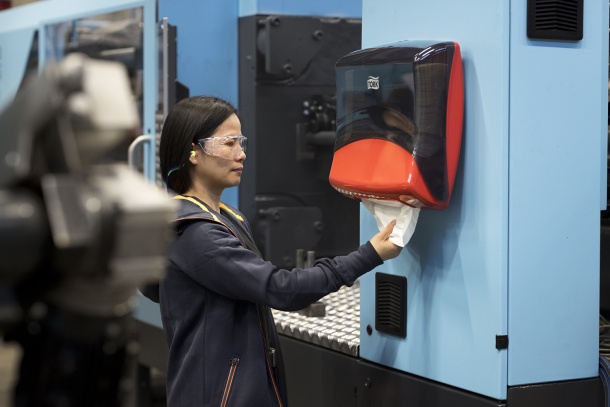
Wipers and cloths are used in various sectors including the manufacturing, automotive, pharmaceuticals, healthcare and food preparation industries. But can the same wiper be used in all of these environments? Ann Laffeaty asks the question and finds out why bespoke products are often required for use in certain environments.
THE TERM ‘WIPING’ actually covers a whole range of disciplines. People use wipes and cloths for various purposes depending on which industry they are in. They may simply wish to remove dust
or dirt from a piece of machinery, for example, or perhaps they will need to sanitise or disinfect a hygiene-critical surface with a wiper impregnated with a cleaning solution.
Wipers are also widely used in mechanical engineering environments for removing grease and grime from the hands. And they are an essential tool for polishing paintwork, cleaning intricate components and mopping up spills in the automotive industry.
One wipe for any task?
But is there such a thing as a single cloth or wiper that can be used for any task? Or do these products always need to be adapted to suit specific environments?
There are definitely some wipers and cloths that can be used across more than one industry, says Essity’s communications director Jenny Turner. “But this is only when their functional qualities match the demands of the task,” she said. “The suitability of a wiper depends far more on its material properties than on the industry itself. For example, a cloth that is highly absorbent, low-linting, durable and food?contact approved can often perform well in different settings that share similar cleaning challenges.”
In the same way, a wiper designed for efficient grease removal or scratch?free cleaning in the industrial sector may also be appropriate for other environments, she says. “The same wiper may be suitable for food preparation or in a general hygiene scenario where the same needs exist,” she said.
“However, while some cloths perform well across multiple segments, not all products are universal.”
Low linting wipers are essential for environments where stray fibres could have a detrimental impact on processes or contaminate surfaces, according to Turner. “Lint could have an adverse effect on the operation of delicate machinery, for example, or cause problems in the food preparation sector,” she said.
Healthcare needs
“Abrasive cloths designed for heavy-duty cleaning such as removing grease or carbonised residues should never be used on scratch sensitive surfaces. And polishing tasks will require soft, non abrasive, lint free materials to avoid streaks and prevent surface damage.”
High standards of hygiene are essential in healthcare environments where all wipers and cloths need to be low linting, highly absorbent and compatible with cleaning, sanitising and disinfecting protocols, she said. “These products should support infection prevention measures and be able to help teams execute cleaning tasks effectively and consistently,” said Turner.
Colour coded cloths play an important role in both healthcare and food settings, she adds. “Colour coding is a simple method of limiting cross contamination and ensuring that all cloths used in high risk areas such as food contact environments are not accidentally reused elsewhere,” she said. “The same principle applies in healthcare where separating cloths by area or by cleaning function helps to protect patients by preventing the transfer of microorganisms between rooms and surfaces.”
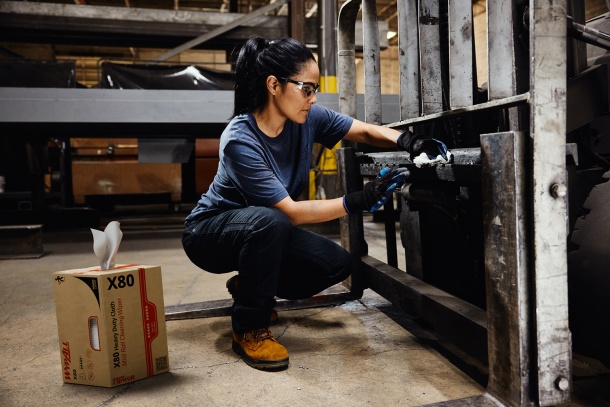
Cloths and wipers in manufacturing and automotive settings typically need to be durable so they can be used for heavy duty wiping tasks such as removing oil and grease, she said.
“They also need a high degree of absorbency to minimise solvent use and speed up wipe downs, and they must also be compatible with chemicals since solvents are frequently used in these environments,” she said. “A low-linting wiper will be required here because stray fibres could interfere with machinery or surface coatings. And a scratch free performance is important for sensitive automotive surfaces.”
Tork offers a range of industrial cleaning cloths designed to absorb solvents quickly and prevent scratching when used on delicate equipment. The company also offers colour-coded cloths for use in hygiene-critical environments.
Kimberly-Clark’s end-user marketing lead Catherine Grinstead says wiping may appear on the surface to be a fairly universal task.
Right wiper for the job
“However, using the right wiper for the job is critical for achieving an effective clean while also protecting people, products and processes,” she said. “In the food preparation sector, for example, the industry calls for food contact-approved wipes and there is an industry-wide acceptance that blue-coloured wipers are preferred in these environments for high visibility.”
Controlled or sensitive environments typically require low lint or lint free wipers to avoid contamination, she adds. “Automotive and manufacturing settings on the other hand may need more durable, absorbent wipers capable of handling oils, grease and solvents.”
Some applications require soft, non abrasive materials for polishing or for surface finishing, she adds. “Others may benefit from a textured or abrasive wipe for heavier dirt removal,” said Grinstead. “No single wiper can deliver optimal performance across all these needs.”
Wipers In healthcare environments are often used with disinfectants, she says. “This means they need to be strong when wet, low linting and compatible with chemicals without breaking down,” said Grinstead. “Infection control is paramount here which means consistency, cleanliness and reliability all matter greatly.”
Must be compliant
Hygiene and food safety are the overriding concerns in the food industry, she says. “Wipers here must be compliant for use in food preparation areas as well as highly absorbent for mopping up spills and capable of reducing the risk of cross contamination,” she said. “Visual differentiation, such as colour coding, is also commonly used to help support hygiene protocols in food handling environments.”
The pharmaceuticals sector is a particularly demanding environment, according to Grinstead. “In many cases, clean room or clean controlled wipers are required to minimise particle shedding and support strict contamination control standards,” she said. “Consistency of performance, traceability and compliance with regulatory expectations are all critical in pharmaceutical manufacturing and laboratory settings.”
Manufacturing and automotive environments typically require strong, durable wipers that can cope with oils, grease, solvents and heavy soils, she says. “High absorbency and strength are key here along with resistance to tearing during use. In automotive finishing or inspection areas, low lint wipes are essential to protect paintwork and surfaces.”
Using the wrong wiper could cause a whole raft of problems, according to Grinstead. “Lint could contaminate sensitive equipment or products while abrasive wipes could damage delicate surfaces such as vehicle bodywork,” she said. “Insufficient absorbency could lead to ineffective spill control and increased safety risks. And In regulated environments, the wrong choice of wiper could compromise hygiene standards or compliance requirements.”
Kimberly Clark advocates a ‘right wipe for the right purpose’ approach to help businesses choose the most appropriate solution for each application rather than relying on a one-size-fits-all product.
Better performance
So are there any cases where one cloth could be used for all tasks? Multipurpose wipers can be effective for general, non critical applications where the risks are low and where the requirements are less demanding, she said. “However in most professional environments, specialist wipers designed for specific tasks will deliver better performance, improved safety and greater efficiency,” she said.
Multipurpose wipers can be effective in low risk environments and for general cleaning tasks such as everyday spills, says Essity’s Jenny Turner. “However, specialist cloths are always preferable when the task demands a specific property,” she said. “Selecting the right product for the job is therefore essential to achieving safe, efficient and high quality cleaning results.”





 RSS
RSS